Gloucestershire councils set sights on future membership of the West of England Combined Authority
Six of Gloucestershire’s seven councils have written jointly to Government, outlining a shared ambition for…
Your voice matters! Consultation now open – shape the future of Gloucestershire’s local services


These councils include strategic authorities (currently these are mayoral combined authorities such as Greater Manchester), county councils, city councils, borough councils, district councils and parish councils.
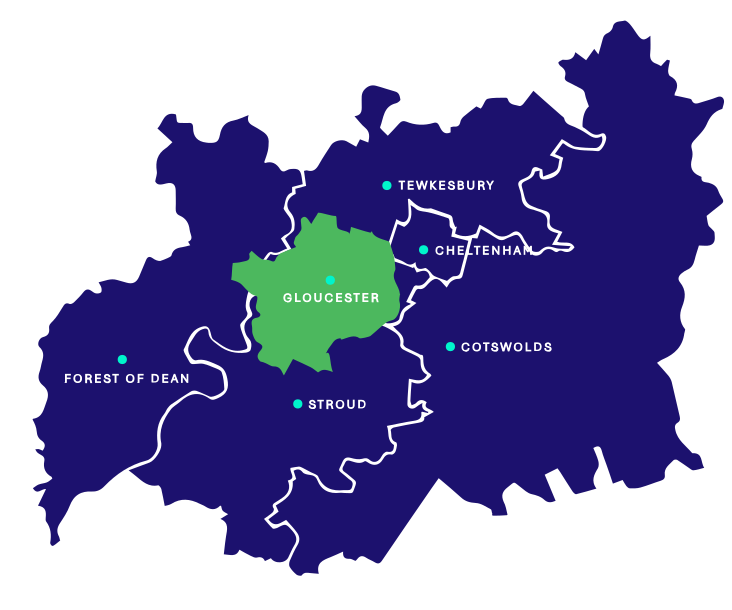
In Gloucestershire, we have:
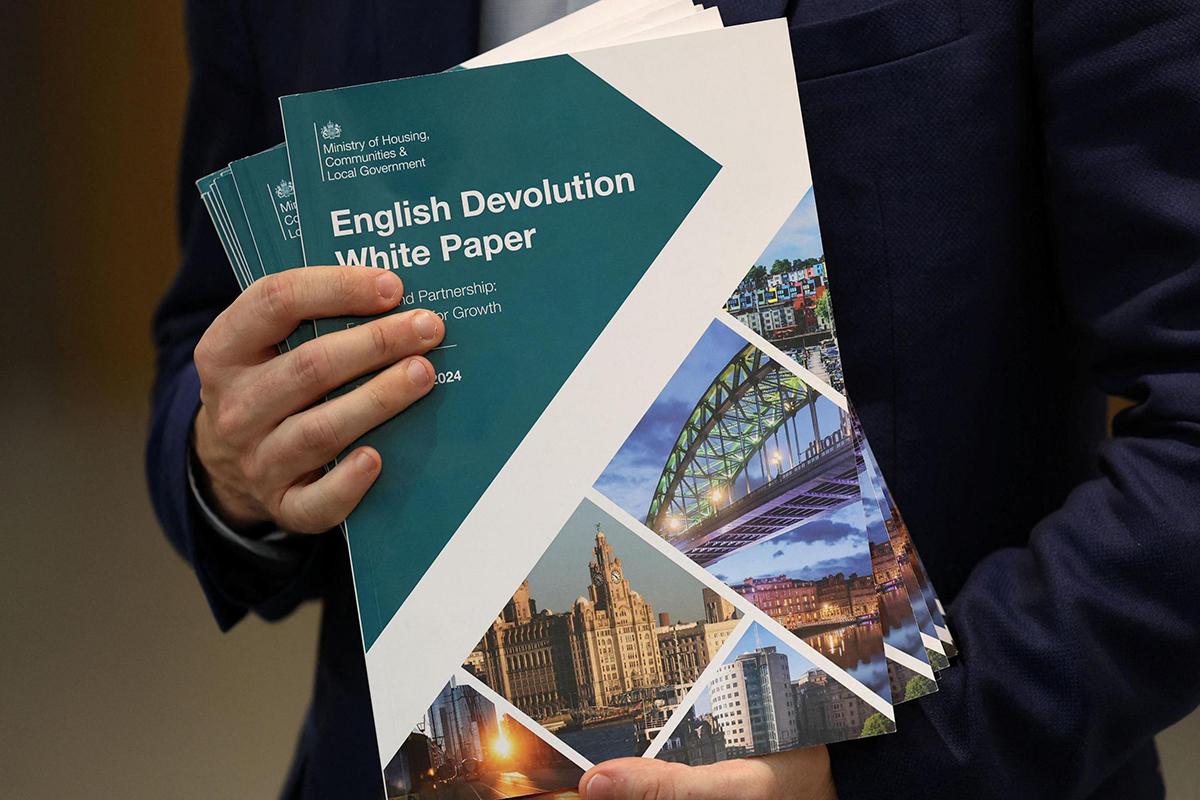
The main goals of the recent White Paper are to give local areas more control over decisions (known as devolution) and to make the local government structure simpler (known as Local Government Reorganisation, or LGR).
Each of the seven councils considered the proposals through their own democratic processes and voted on their preferred options. Links to council discussion papers and outcomes can be found below.
The three proposals were submitted to the government on 28 November 2025.
A joint covering letter – signed by Gloucestershire County Council, Cheltenham Borough Council, Cotswold District Council, Forest of Dean District Council, Stroud District Council and Tewkesbury Borough Council – was also submitted to accompany the proposals.
In addition, each council had the option of submitting their own letter to set out their preferred option.
The government will be taking views on the proposals submitted, and will make a decision on which best meets their criteria, with a government run consultation likely to be in the early part of 2026.

Cabinet – Monday, 3 November 2025
Council – Wednesday, 12 November 2025
Cabinet – Wednesday, 19 November 2025
Papers are available (Thursday, 23 October 2025).
Proposal recommended:
Single unitary authority

Council – Wednesday, 19 November 2025
Cabinet – Thursday, 20 November 2025
Papers are available (Wednesday, 5 November 2025.)
Proposal recommended:
Not supportive of Local Government Reorganisation
(i.e. none of the above)

Council – Monday, 17 November 2025
Cabinet – Tuesday, 18 November 2025
Papers are available (Friday, 7 November 2025).
Proposal recommended:
Two unitary authorities (east/west)

Council – Tuesday, 18 November 2025
Papers are available (Monday, 10 November 2025).
Proposal recommended:
Single unitary authority

Council – Thursday, 20 November 2025
Papers are available (Wednesday, 12 November 2025).
Proposal recommended:
Two unitary authorities
(Greater Gloucester/Gloucestershire Unitary)

Council – Thursday, 20 November 2025
Papers are available (Wednesday, 12 November 2025).
Proposal recommended:
Single unitary authority

Overview and Scrutiny – Monday, 17 November 2025
Cabinet – Thursday, 20 November 2025
Council – Wednesday, 26 November 2025
Papers are available (Wednesday, 12 November 2025).
Proposal recommended:
Single unitary authority



The consultation asks whether the proposals:
The government will use the responses to help assess which option best meets the criteria for effective local government.
The consultation will run for seven weeks from Thursday, 5 February. You can give your feedback here.
If you’d like to share this within your community, you can download our promotional resources.

We want to thank the thousands of people who took the time to fill in our survey.
Webinars were held Tuesday, 5 August and Wednesday, 6 August to provide information about devolution and Local Government Reorganisation and to give people the opportunity to ask questions. If you were unable to attend, or want to watch again, you can view a recording of the main presentation.
This is the quickest possible timetable for setting up a new council in Gloucestershire. The dates may change, depending on decisions made by the government.
Gloucestershire councils submit interim plan and proposal for new unitary structure.
Gloucestershire councils submit full proposal and plan for new unitary structure.
Government reviews proposals – decision and legislative changes to follow.
Elections for new unitary (shadow authority).
New unitary structure introduced.

Part of devolution involves powers that currently sit with government being given to a local area. The government is keen to do this by establishing strategic authorities in areas that don’t currently have one. The role of a strategic authority can vary, but the aim is that local decision makers can have more of a say in what happens in their area and are responsible for large projects that make a difference to peoples’ lives, including:
For Gloucestershire, devolution will see the creation of a new strategic authority, made up of Gloucestershire and other neighbouring areas such as West of England (Bristol, Bath and South Gloucestershire) or Herefordshire and Worcestershire, and the authority will be led by a directly elected mayor.
Recently, the government announced the six new areas that will join the Devolution Priority Programme – Gloucestershire is not one of the areas that will be prioritised in this first phase, however we are still expected to submit proposals to government by November 2025.
Local Government Reorganisation is the process in which the structure and responsibilities of local authorities are reconfigured.
The English Devolution White Paper also sets out that new, larger unitary authorities will replace district, borough and county councils.
Given 60% of the country already has strategic authorities (mayoral authorities) and unitary councils, it is seeking to reorganise local government in areas that still have separate county and district councils – replacing them with unitary authorities to deliver all services. In the south-west of England, only Gloucestershire and Devon have a two-tier system. All the other counties and cities are run by unitary councils.
Devolution could mean:
Local Government Reorganisation could mean:
Currently, local councils are asking for residents’ views that will help them to develop the initial proposals they handed in to government in March into full business cases. These business cases must be submitted to government in November 2025.
The government then plans to conduct a formal consultation on the proposals submitted by Gloucestershire councils around the turn of the year. You can get an idea of what this might look like by viewing the consultation currently live in Surrey – Local government reorganisation in Surrey – GOV.UK.
Ultimately, it is the government that will decide which proposal is implemented in Gloucestershire.
Gloucestershire councils submitted an interim proposal to Government in line with the 21 March deadline, both single-unitary and two-unitary options. Cheltenham Borough Council also submitted an additional proposal for a two-unitary split.
The English Devolution White Paper sets out the government’s agenda to increase and expand devolution across all parts of England.
Visit the LGA Devolution Hub to find further information and resources. This includes a list of regularly updated devolution and local government reorganisation FAQs.
You can find updates on the current devolution framework and devolution deals agreed between the government and local areas.
The letter dated 25 July 2025, to Leaders of the councils in the 21 areas invited to submit proposals for unitary local government.
The letter to all two-tier councils and neighbouring unitary authorities, dated 16 December 2024, sets out the government’s process and milestones.